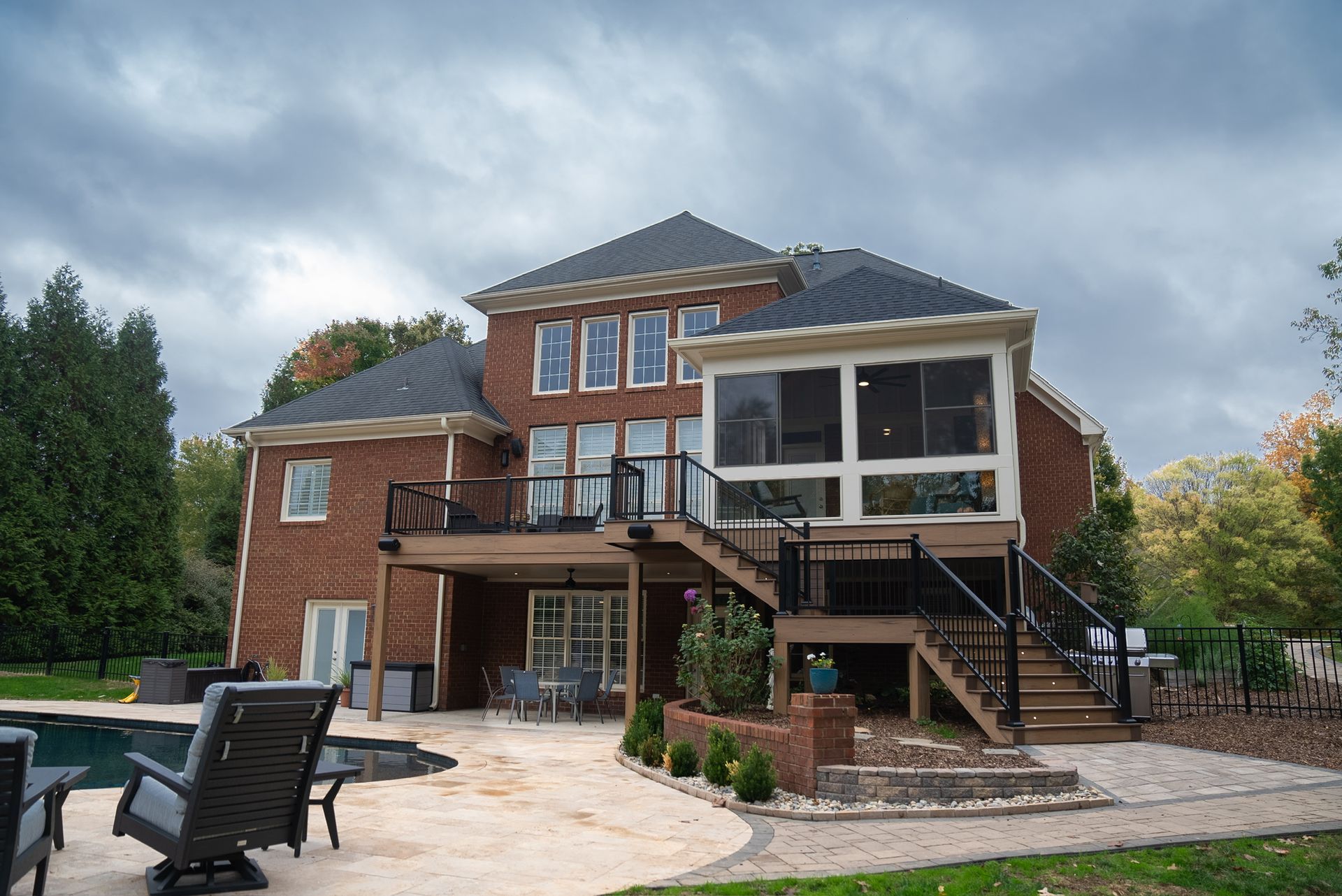
Wood vs. Composite Decking: Which is Best for Your Home?
Wood vs. Composite Decking: Which is Best for Your Home?
A deck is more than just an outdoor space—it’s an extension of your home where you relax, entertain, and enjoy the beautiful Chattanooga scenery. If you're considering adding or replacing a deck, one of the biggest decisions you’ll face is choosing between wood and composite decking. Each has its pros and cons, and the best choice depends on your budget, maintenance preferences, and aesthetic goals.
Wood Decking: The Classic Choice
Wood has been the go-to material for decks for generations. Its natural beauty and traditional charm make it a favorite among homeowners.
Pros of Wood Decking
- Authentic look and feel – Nothing beats the natural grain and warmth of real wood.
- Lower initial cost – Wood is generally cheaper upfront compared to composite materials.
- Customizable – You can stain or paint it to match your home’s aesthetic.
- Easier to repair – Individual boards can be replaced or refinished as needed.
Cons of Wood Decking
- High maintenance – Requires regular staining, sealing, and cleaning to prevent rot and weather damage.
- Prone to rot and pests – Over time, wood can warp, crack, or attract termites.
- Shorter lifespan – Even with proper care, wood decking typically lasts 10-15 years before needing significant repairs or replacement.
Best Wood Choices for Chattanooga Decks
- Pressure-Treated Pine – Affordable and widely available, but requires frequent upkeep.
- Cedar or Redwood – Naturally resistant to insects and decay, but more expensive.
- Ipe (Brazilian Hardwood) – Incredibly durable and weather-resistant but comes at a premium cost.
Composite Decking: A Low-Maintenance Alternative
Composite decking is made from a blend of wood fibers and plastic, offering the look of wood without the maintenance headaches. It has grown in popularity due to its durability and longevity.
Pros of Composite Decking
- Low maintenance – No staining, sealing, or sanding required—just occasional cleaning.
- Weather and pest resistant – Won’t rot, warp, or attract termites.
- Long lifespan – Can last 25-30 years with minimal upkeep.
- Eco-friendly options – Many brands use recycled materials.
Cons of Composite Decking
- Higher initial cost – More expensive than wood, but pays off in the long run with reduced maintenance.
- Can get hot in the sun – Some composite materials retain more heat than natural wood.
- Less customizable – Comes in pre-set colors and finishes, so you can’t stain or paint it.
Best Composite Brands for Your Deck
- Trex – Known for durability and eco-friendly materials.
- TimberTech – Offers a wide range of colors and realistic wood textures.
- Fiberon – A budget-friendly option with solid warranty coverage.
Which is Best for Your Home?
The best decking material depends on your priorities:
- Choose wood if you love the natural look, don’t mind regular maintenance, and want a lower upfront cost.
- Choose composite if you prefer a long-lasting, low-maintenance solution and are willing to invest more upfront.
Need Help Choosing? Let Ringhofer Home Services Help!
Whether you're looking for the classic appeal of wood or the hassle-free benefits of composite decking, Ringhofe Home Services in Chattanooga, TN, can guide you through the decision-making process. Our team specializes in custom deck installation and maintenance, ensuring your outdoor space is built to last.
Call us today for a consultation and get started on your dream deck!